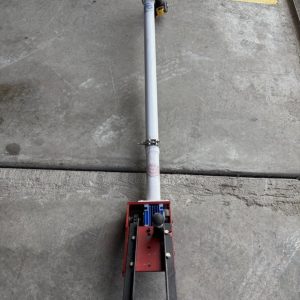
The Aircraft Electric Tow Bar – Mini Max Style combines portability, powered operation, and straightforward handling for users who regularly reposition suitable light aircraft. Using an Aircraft Electric Tow Bar can simplify hangar positioning, reduce manual handling demands, and provide more predictable movement on suitable ground surfaces.
A used Electric Tow Bar for Aircraft can provide strong practical value when its drive system, frame, connections, controls, and included accessories remain in good condition. The value of a Used Electric Aircraft Tow Bar depends on condition, completeness, prior use, aircraft compatibility, and the availability of suitable replacement parts or accessories.
The compact design of a Mini Max Aircraft Tow Bar makes it a practical option for individual aircraft owners, small maintenance shops, and shared hangar facilities. An Aircraft Tow Bar with Drill provides powered movement, while the included Aircraft Tow Bar with Charger supports convenient battery maintenance between uses.
The Portable Aircraft Tow Bar design can support flexible use across private hangars, shared aviation facilities, maintenance shops, and general aviation ramps. This Powered Aircraft Tow Bar can also serve as an Electric Airplane Tow Bar for compatible light aircraft when the connection method, aircraft weight, nose-wheel arrangement, surface, and operating conditions are suitable.
Aircraft Ground Handling Equipment should match the operator’s aircraft, movement frequency, available space, ground surface, budget, and maintenance resources. The package may be described as an Electric Aircraft Mover because it provides powered assistance for aircraft positioning without requiring a conventional motorized tug.
Understanding the Aircraft Electric Tow Bar – Mini Max Style
This type of powered tow bar is designed to support routine general aviation handling where compact size and controlled operation are priorities. A compact tow bar may perform differently on level concrete than on rough pavement, gravel, wet surfaces, steep slopes, or areas with limited traction.
Compact equipment can be especially useful in hangars where the aircraft must be positioned accurately between walls, doors, support columns, equipment, or neighboring airplanes. A second person may be appropriate when moving an aircraft in congested areas, through narrow hangar doors, or near obstacles.
Why Use an Electric Tow Bar for Aircraft
The powered system can make aircraft movement more manageable for operators who find traditional pushing and pulling physically demanding. Potential applications include moving an airplane for maintenance access, hangar entry, cleaning, storage, preflight preparation, or equipment rearrangement.
Moving an aircraft without engine power can reduce unnecessary propeller activity, exhaust, noise, fuel consumption, and airflow inside or near the hangar. The operator should follow the aircraft manufacturer’s towing guidance and avoid exceeding steering, nose-wheel, or tow-point limitations.
Buying a Used Electric Aircraft Tow Bar
A Used Electric Aircraft Tow Bar can provide excellent value when it has been operated carefully, stored correctly, and supplied with functioning powered accessories. The seller reports that this unit was used with a Navion aircraft for approximately six months and replaced after an upgrade to a dedicated tow tug.
Current images should show the complete tow bar from several angles as well as close views of high-load areas and identification markings. An independent inspection by a local aviation professional can provide additional confidence before payment or shipment.
Mini Max Aircraft Tow Bar Operation
A Mini Max Aircraft click here Tow Bar is generally selected by operators who want powered movement in a compact configuration that does not occupy the floor space of a conventional aircraft tug. A compact tow bar may be easier to maneuver around crowded hangar spaces than a wide or heavy tug.
Before use, the buyer should confirm that the tow bar interfaces correctly with the intended aircraft without damaging the gear, fairing, tire, or steering system. The tow connection must remain secure throughout forward, reverse, and turning operations without placing unsuitable force on the aircraft.
Aircraft Tow Bar with Drill Operation
An Aircraft Tow Bar with Drill can offer a simple and serviceable approach to powered ground handling by using a familiar rechargeable tool as the drive source. Using the proper drill configuration helps the tow bar move smoothly while limiting unnecessary stress on the drive components and power tool.
Familiarity with the drill response, steering behavior, stopping distance, and reverse control can improve confidence and reduce handling errors. Consistent inspection and maintenance help protect both the powered tool and the aircraft-moving equipment from avoidable wear.
Aircraft Tow Bar with Charger Package
A complete charging arrangement supports routine readiness by allowing the operator to restore battery capacity after use. Buyers should confirm that the charger operates correctly, matches the battery type, has an undamaged cable, and is suitable for the available electrical supply.
Operators should follow the drill manufacturer’s battery guidance and avoid exposing batteries to excessive heat, moisture, impact, or freezing conditions. Maintaining the battery at an appropriate charge level supports consistent torque, predictable speed, and reliable movement under load.
Portable Aircraft Tow Bar Applications
A Portable Aircraft Tow Bar offers flexibility for users who operate from more than one hangar, travel between maintenance areas, or need equipment that can be moved easily within an aviation facility. Loose accessories such as the drill, charger, adapters, pins, and fasteners should be stored separately in labeled protective containers.
Clean, dry storage can protect metal surfaces, wheels, attachments, electrical accessories, and controls from corrosion or deterioration. A simple pre-use checklist can confirm that all portable components were returned after the previous operation and remain ready for service.
Powered Aircraft Tow Bar Applications
A Powered Aircraft Tow Bar is useful when an aircraft is difficult to move because of weight, tire resistance, hangar slope, limited grip, or frequent repositioning needs. A unit that appears powerful while unloaded may behave differently when attached to an aircraft on a slope, rough pavement, or high-resistance surface.
Operators should use slow speeds near hangar doors, walls, parked vehicles, tools, support stands, people, and other airplanes. The operator should never rely exclusively on the tow bar to hold an aircraft stationary on an incline.
Choosing an Electric Airplane Tow Bar
The equipment can support owners of compatible airplanes who need controlled movement before flights, after maintenance, or during hangar organization. Aviation maintenance personnel can help evaluate whether the tow connection is appropriate and whether the aircraft manufacturer permits the intended method.
The operating area should be inspected for loose gravel, oil, water, ice, cables, thresholds, floor drains, uneven pavement, and other conditions that can reduce traction or interrupt movement. Operators should understand how the tow bar reacts before attempting a tight turn or backing the aircraft through a narrow doorway.
Aircraft Ground Handling Equipment for Private Hangars
Larger powered tugs may be more appropriate when operators move several aircraft, work on significant gradients, or require continuous heavy-duty operation. Buyers should consider total operating readiness rather than focusing only on the price of the metal towing assembly.
Ground equipment should be examined regularly because repeated towing loads can loosen fasteners, wear wheels, stress connections, and damage drive components. Preventive maintenance is generally easier and less costly than dealing with equipment failure while an aircraft is partially moved.
Aircraft Hangar Tow Bar Benefits
A powered hangar tow bar may reduce the need to push on aircraft structures or recruit additional people for every movement. Floor markings or visual reference points can help operators stop the aircraft in a consistent location without approaching walls too closely.
A compact powered tow bar should never be treated as a high-speed vehicle or used to rush routine ground movement. The drill, charger, adapter, and loose hardware should be returned to their assigned storage locations after use.
Aircraft Moving Equipment Benefits
A drill-powered tow bar may provide an efficient balance of portability, simplicity, affordability, and useful towing assistance. A unit that performs well under ideal conditions may have reduced capability when traction is poor or the aircraft must cross a threshold or incline.
Aircraft-moving tools should never be attached to unapproved structures or used to pull on fairings, propellers, control surfaces, steps, or other unsuitable components. Regular maintenance preserves equipment value and gives the operator greater confidence during every aircraft movement.
Electric Aircraft Mover Applications
For appropriate applications, a drill-powered mover can be more practical than maintaining a larger battery-powered or engine-driven tug. If the aircraft does not move smoothly, the cause should be identified rather than applying increasing force that may damage equipment or landing gear.
Battery-powered movement avoids exhaust emissions and allows the unit to operate without storing fuel near the aircraft. Recording drill and battery model numbers can simplify future replacement and help the buyer confirm compatibility with spare equipment.
Aircraft Mobility Equipment Applications
The right Aircraft Mobility Equipment can improve hangar efficiency by allowing aircraft to be moved without reorganizing personnel or starting engines unnecessarily. A Mini Max-style tow bar can be particularly useful where the operator values portability and direct control more than long-distance towing or commercial capacity.
Written instructions can include setup, attachment, starting, steering, reversing, stopping, disconnecting, charging, and storage procedures. A tow bar that worked well for one aircraft may not remain suitable after a change in airplane, landing gear, weight, or attachment arrangement.
Choosing a Light Aircraft Tow Bar
The term Light Aircraft Tow Bar describes a broad category, so buyers should not assume that every compact unit fits every general aviation airplane. The buyer should identify the aircraft model, landing-gear configuration, tire or wheel-pant arrangement, and required attachment before ordering.
A properly prepared aircraft should roll smoothly enough that the tow bar provides assistance rather than excessive force. Routine care should include checking the frame, hardware, wheels, drive connection, adapter, drill, battery, charger, and storage condition.
Long-Term Tow Bar Ownership
Preventive care helps operators identify minor wear before it becomes a failure that interrupts aircraft movement or risks damage. Inspection frequency should increase when the equipment is used outdoors, shared among several operators, transported regularly, or exposed to moisture and uneven surfaces.
- Confirm that the towing assembly is complete, structurally sound, correctly adjusted, and free from damage that could affect aircraft movement.
- A short functional test can reveal electrical or drive concerns before the aircraft is connected and positioned near obstacles.
- Clean and store the tow bar, drill, charger, adapters, pins, and hardware in a dry, organized, protected location after operation.
Final Thoughts on the Aircraft Electric Tow Bar – Mini Max Style
The Aircraft Electric Tow Bar – Mini Max Style offers an appealing combination of powered operation, portable design, direct control, and included accessories. Buyers can reduce risk by requesting photographs, operating videos, accessory details, measurements, previous-use information, secure payment terms, and documented shipping arrangements.
Whether operators are sourcing an Electric Aircraft Mover, Aircraft Mobility Equipment, or Light Aircraft Tow Bar, safe attachment, adequate capacity, and responsible maintenance remain essential. With professional compatibility review, controlled use, organized storage, and preventive maintenance, the unit can remain a practical alternative to larger towing machinery.